


Hidden Asthma Triggers and How To Manage Them
Hidden Asthma Triggers and How To Manage Them
Reviewed by Otto R. Garcia MD Internist at Hermosa Medical and Diagnostic Center
*Last updated: September 2026*
Key takeaways
- Rescue inhaler use more than 2 times a week means your asthma is not controlled.
- 9 hidden triggers cause more uncontrolled asthma than pollen exercise and cold air combined.
- Dust mite cockroach allergen and indoor mold are the 3 biggest and all are controllable.
- Reflux and untreated sinus disease keep asthma uncontrolled no matter how good the inhaler is.
- Chicago sees a documented asthma spike every September when school returns.
The obvious triggers handled in allergy and asthma care are pollen exercise cold air and respiratory infection. Most people already know those.
The hidden ones cause more uncontrolled asthma. Dust mite in bedding. Cockroach allergen which is a major driver in older urban housing. Mold in bathrooms and basements. Acid reflux that fires at night. Untreated sinus disease. Stress. Certain medications including common pain relievers and blood pressure drugs. Fragrance and cleaning products. Weather fronts and thunderstorms.
The approach is the same regardless of which one you have. Identify it by pattern and by testing. Remove or reduce it. Treat the underlying inflammation with a controller medication rather than leaning on a rescue inhaler. Then measure whether control actually improved.
One number tells you where you stand. If you reach for a rescue inhaler more than twice a week your asthma is not controlled and the plan needs changing.
Hidden triggers and what fixes each one
|
Trigger |
Giveaway pattern |
How to confirm |
Cost to fix |
Time to improvement |
|
Dust mite |
Worse in the morning and worse in bed |
Skin prick or blood test |
Low. Covers and hot washing |
4 to 8 weeks |
|
Cockroach allergen |
Symptoms tied to one building. Older housing |
Skin prick or blood test |
Low to moderate. Pest management |
8 to 12 weeks |
|
Indoor mold |
Worse at home. Better when travelling |
Visual inspection plus testing |
Moderate. Fix moisture first |
4 to 12 weeks |
|
Acid reflux |
Cough and tightness lying flat or after late meals |
Clinical trial of treatment |
Low. Generic medication |
2 to 8 weeks |
|
Chronic sinus disease |
Congestion facial pressure cough worse on waking |
Examination and sometimes imaging |
Low to moderate |
4 to 8 weeks |
|
Medications |
Started within weeks of worsening |
Medication review |
None. Substitution |
1 to 4 weeks |
|
Occupational exposure |
Better on days off and holidays |
Symptom diary by day |
Varies |
Weeks off exposure |
Using a rescue inhaler more than twice a week? That is the threshold where the plan needs to change rather than the dose. Call 773 772 8876 or book an appointment online.
The triggers most people miss
Nine triggers account for most uncontrolled asthma and none of them are the ones people name first. They are dust mite cockroach allergen indoor mold acid reflux untreated sinus disease medications fragrance and irritants stress and weather change. Each has a recognizable pattern and most are fixable at low cost.
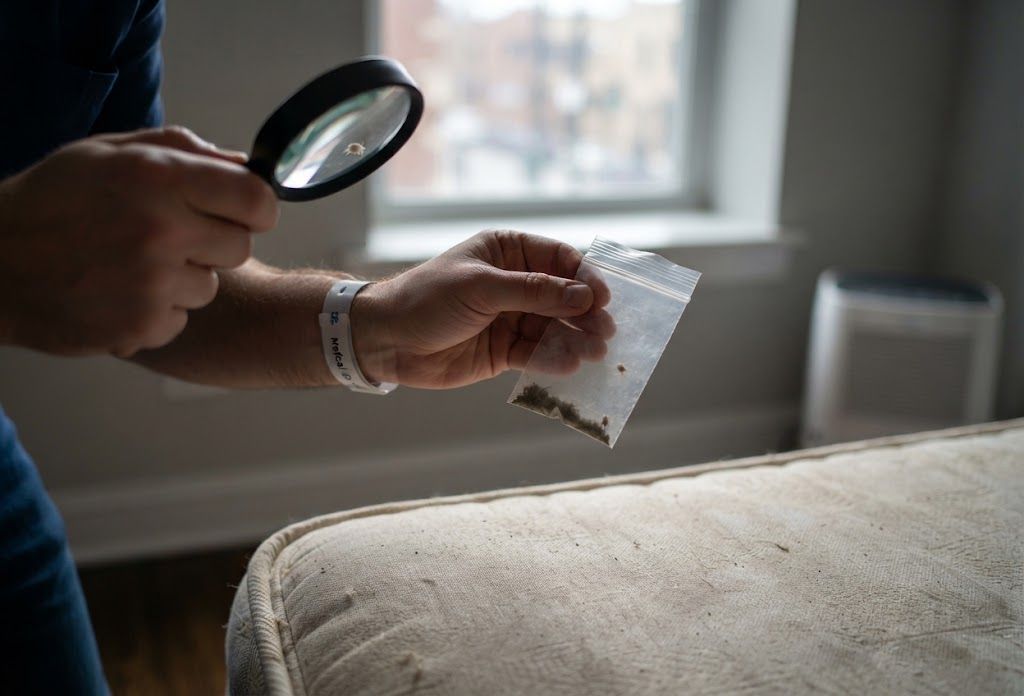
Dust mite. Microscopic organisms in mattresses pillows bedding and upholstery that thrive above fifty percent humidity. The giveaway is symptoms worse in the morning and worse in bed. Many people read this as nighttime asthma generally when it is a bedding exposure specifically.
Cockroach allergen. The one that goes unrecognized most often and it matters enormously in older urban housing. You do not need to see cockroaches. The allergen sits in dust and persists long after any infestation is treated.
Indoor mold. Bathrooms basements under sinks around window frames and inside humidifiers. The pattern is symptoms that worsen at home and improve during travel.
Acid reflux. Stomach acid at the lower esophagus triggers a reflex that constricts the airways and can aspirate directly. Many people with reflux related asthma have no heartburn at all. Cough and chest tightness worse lying flat and after late meals point to it.
Chronic sinus disease and postnasal drip. The upper and lower airways behave as one system. Untreated sinusitis keeps asthma uncontrolled no matter how good the inhaler technique is.
Medications. Nonsteroidal anti inflammatory drugs including aspirin and ibuprofen trigger bronchospasm in a subset of people. Beta blockers including some glaucoma eye drops worsen asthma and blunt rescue inhaler response. ACE inhibitors cause a dry cough frequently mistaken for worsening asthma.
Fragrance and cleaning products. Scented candles air fresheners bleach ammonia and aerosols irritate airways directly with no allergic mechanism involved.
Stress and strong emotion. Not weakness. Stress alters breathing pattern and increases airway inflammation through measurable pathways.
Weather and thunderstorms. Cold dry air constricts airways. Thunderstorm asthma is documented and occurs when storm conditions rupture pollen grains into fragments small enough to reach deep into the lungs.
How to find which one is yours
Four steps identify most triggers. Keep a symptom diary for four weeks recording time of day location activity weather and rescue inhaler use. Note location effects. Get allergy testing. Get spirometry. Patterns emerge from written data that memory reliably hides.
Location effects are the fastest clue. Better at work and worse at home points to a home exposure. The reverse points to occupational cause. Better on holiday points squarely at the building you live in.
Allergy testing converts guesswork into a target list. Skin prick or specific immunoglobulin E blood testing identifies dust mite cockroach mold pet dander and pollen sensitization. Our guide to what to expect at an allergy test covers the visit.
Spirometry confirms the diagnosis. Lung function before and after a bronchodilator measures severity and reversibility. A surprising number of people carrying an asthma label have never had it confirmed objectively.
Rule out the imitators. Vocal cord dysfunction heart failure COPD and anxiety all produce breathlessness. Treating the wrong condition wastes years and our internal medicine team separates them.
Bedroom control delivers the highest return
The bedroom is where trigger control pays best because you spend roughly a third of your life there in direct contact with bedding. Five measures cover most of it. Allergen impermeable covers on mattress pillow and box spring. Weekly bedding washing above 130 degrees Fahrenheit. Carpet removal where possible. Humidity held between thirty and fifty percent. Pets out of the room entirely.
Impermeable covers have solid evidence behind them for dust mite. They are also cheap and last years.
Water temperature matters and gets missed. Cooler washes do not kill mites. If your machine cannot reach 130 degrees a tumble dry on high heat helps.
Humidity is the lever most people never touch. Mites cannot survive below fifty percent. In a Chicago basement a dehumidifier is frequently the single highest impact purchase in the whole plan.
Hard flooring holds a fraction of the allergen reservoir that carpet does. If replacing flooring is not possible a sealed bedroom with covers and weekly hot washing still captures most of the benefit.
Cockroach mold and air quality
Cockroach control means integrated pest management rather than spraying. Seal entry points remove food sources fix leaks and use bait stations. Spray insecticides add irritants to the air and target visible insects rather than the allergen reservoir sitting in dust.
Clean thoroughly after any treatment because the allergen persists long after the insects are gone. This step gets skipped and it is the step that actually reduces exposure.
If you rent Illinois tenants have habitability rights covering pest control. Document requests in writing and keep copies.
Mold. Fix the moisture source first because removing visible mold without fixing the leak guarantees it returns. Run bathroom fans for twenty minutes after showering. Dehumidify basements. Clean small areas with detergent and water. Areas above roughly ten square feet generally warrant professional remediation.
Air quality. High efficiency particulate filtration in the bedroom reduces airborne particles including pollen and pet dander. It does little for dust mite allergen which is heavy and settles fast so it complements bedding measures rather than replacing them. Avoid indoor smoking entirely. Ventilate when cooking with gas appliances which produce nitrogen dioxide.
Medication strategy and why rescue inhalers are not the plan
Asthma is an inflammatory disease and rescue inhalers do not treat inflammation. Current guidance for most adults and adolescents favors an inhaled corticosteroid containing reliever rather than a short acting bronchodilator alone. Regular controller therapy reduces exacerbations substantially and that is the point of treatment.
Albuterol sold as Ventolin and ProAir is a rescue medication. It opens airways for hours and does nothing to the underlying inflammation. Using more of it is a signal and not a solution.
Inhaler technique is worth checking at every visit. A large share of patients use their device incorrectly which means the medication never reaches the airway at all. Spacers improve delivery considerably with metered dose inhalers and cost very little.
Get an asthma action plan in writing. It should specify daily medication what to do when symptoms increase what the yellow zone response is and exactly when to seek emergency care.
Annual influenza vaccination and pneumococcal vaccination are recommended because respiratory infection is a leading cause of exacerbation.
A typical case we see
A man in his forties from Belmont Cragin had used a rescue inhaler four or five times a week for two years. He had been told his asthma was mild. He assumed that level of use was normal.
The diary showed symptoms worst on waking and clearly worse at home than at work. Testing came back strongly positive for dust mite and cockroach allergen. Spirometry confirmed reversible obstruction. He also described a night cough and tightness after late meals which pointed at reflux.
The plan had three parts. A controller inhaler with technique checked in the room. Impermeable bedding covers weekly hot washing and a dehumidifier. A trial of reflux treatment. At the eight week review rescue use had fallen to once a fortnight.
*Illustrative example. Composite of common presentations. Not a specific individual and not a testimonial. replace with a real anonymized case from clinic records.*
### Talk to someone about asthma that is not under control
>
Walk ins are welcome at 2004 N Pulaski Rd in Chicago. No appointment needed.
>
Call 773 772 8876 or book an appointment online
See our Allergy and immunotherapy services page for what the visit covers
*Hablamos español. Llame al 773 772 8876 para programar su cita.*
The Chicago asthma calendar
Trigger exposure in Chicago follows a predictable annual pattern and planning around it prevents a large share of flares. Tree pollen late March through May. Grass May through July. Ragweed mid August to the first hard frost. Outdoor mold peaks in humid late summer. Indoor season runs October through March.
September deserves its own note. There is a documented seasonal spike in asthma exacerbations following the return to school driven by viral transmission combined with allergen exposure. Families across Hermosa and Belmont Cragin see it every year. Confirm controller medication is restarted and an action plan is in place before the school year begins rather than after the first flare.
January and February bring cold dry air which constricts airways directly. Breathing through a scarf warms and humidifies air before it reaches the airway and helps measurably.
Two moves follow from this calendar. Start or increase controller medication two to four weeks before your known season rather than after symptoms begin. And get the influenza vaccination in early autumn.
Signs your asthma is not controlled
Six markers indicate poor control and any one of them means the plan needs revision rather than more rescue inhaler. Rescue use more than twice a week. Night waking more than twice a month. Any limitation of normal activity. More than one course of oral steroids in a year. Any emergency visit for asthma. Peak flow consistently below eighty percent of your personal best.
Peak flow zones are worth establishing while you are well. Measure twice daily for two weeks to find your personal best. Green zone is eighty to one hundred percent and you continue the usual plan. Yellow is fifty to eighty percent and you follow the action plan step. Red is below fifty percent and you use the reliever and seek urgent care.
Seek emergency care immediately for severe breathlessness that does not respond to a rescue inhaler difficulty speaking in full sentences blue lips or fingernails or drowsiness with labored breathing.
What happens at your appointment
Expect 40 to 60 minutes for a full asthma assessment. Bring every inhaler you currently use including old ones because technique is checked with your own devices.
Check in. Photo identification insurance card and a full medication list including over the counter pain relievers and eye drops. Both categories matter here.
History and diary review. Symptom timing location effects trigger patterns and rescue inhaler frequency. If you have kept a four week diary bring it. It shortens this stage and improves it.
Spirometry. Lung function measured before and after a bronchodilator. Takes about 15 minutes and involves several forced breaths into a mouthpiece. It confirms the diagnosis and grades severity.
Inhaler technique check. Done with your own device. This is the single most commonly skipped step in asthma care and the one that most often explains an apparently failing medication.
Allergy testing. Skin prick testing applied and read in the same visit when indicated. Hold antihistamines beforehand and confirm with the clinic which ones.
Written action plan. Green yellow and red zones with specific instructions and the phone number for each. You leave with this on paper.
Pharmacy. Controller inhaler and spacer filled at the on site pharmacy before you leave.
What Medicaid and Medicare cover for asthma care in Chicago
Coverage depends on whether a service is medically necessary or cosmetic and it varies by plan. The summary below reflects how Illinois Medicaid and Medicare generally treat these services. Confirm your own plan before the visit because benefits differ between managed care plans.
Generally covered
- Office visits for asthma assessment and follow up
- Spirometry and lung function testing
- Controller and rescue inhalers on the plan formulary
- Spacers and holding chambers when prescribed
- Allergy testing when medically necessary and documented
- Influenza and pneumococcal vaccination
Generally not covered
- Air purifiers dehumidifiers and mattress covers which are classed as home equipment
- Brand name inhalers where a formulary alternative exists unless prior authorization is approved
- Pest control and mold remediation which fall to the landlord or homeowner
Worth bundling into the same visit
- Annual physical or wellness visit in the same trip
- Influenza vaccination during the same appointment
- Allergy testing at the same visit when indicated
- Chest imaging on site when the picture is unclear
We accept Medicaid and Medicare. Call 773 772 8876 to confirm your plan before the visit. Coverage varies by plan so call to confirm rather than assuming.
Frequently asked questions
What are the most common hidden asthma triggers?
Dust mite in bedding cockroach allergen indoor mold acid reflux untreated sinus disease certain medications fragrance and cleaning products stress and weather change.
Can acid reflux cause asthma symptoms?
Yes and often without heartburn. Cough and chest tightness that worsen lying flat and after late meals point toward reflux related asthma.
Does an air purifier help asthma?
It reduces airborne particles such as pollen and pet dander but does little for dust mite allergen which settles quickly. Use it alongside bedding measures rather than instead of them.
How do I know my asthma is not controlled?
Rescue inhaler use more than twice weekly night waking more than twice monthly any activity limitation more than one steroid course per year or any emergency visit.
Which pain reliever is safe if aspirin triggers my asthma?
Acetaminophen is usually tolerated. Discuss this with a clinician before assuming any nonsteroidal anti inflammatory drug is safe for you.
Why does asthma get worse every September in Chicago?
There is a documented seasonal spike in exacerbations following the return to school driven by viral transmission combined with allergen exposure. Restart controller medication before term begins.
Does Medicaid cover asthma inhalers in Illinois?
Controller and rescue inhalers on the plan formulary are covered along with spirometry and office visits. Spacers are covered when prescribed. Call 773 772 8876 to confirm your formulary.
How often should asthma be reviewed?
At least annually when well controlled and every 3 months when not. Review should cover inhaler technique the action plan and lung function.
About the reviewer
Otto R. Garcia MD | Internist | Hermosa Medical and Diagnostic Center
Dr Garcia is a board certified internal medicine specialist at Hermosa Medical Center. He cares for adults across the full range of chronic and acute conditions with a focus on long term disease management. He sees patients in English and Spanish.
Next step
If your rescue inhaler is running out faster than once a month the issue is control and not dosing. A single assessment with spirometry and a technique check usually finds why.
**Go to Allergy and immunotherapy services** to see what we offer and how to book.
Visit Hermosa Medical and Diagnostic Center
Hermosa Medical and Diagnostic Center has served the Chicago West Side for 33 years. Primary care specialty care laboratory services imaging and an on site pharmacy sit in one building so most visits finish in one trip.
Address 2004 N Pulaski Rd Chicago IL 60639
Phone 773 772 8876
Hours Call 773 772 8876 to confirm current hours
Walk ins Welcome. No appointment needed.
Insurance Medicaid Medicare and most major plans accepted
Languages English Spanish and Arabic
We serve Hermosa Belmont Cragin Humboldt Park Logan Square and Austin.
*Hablamos español. Llame al 773 772 8876 para programar su cita. Se habla español.*
Getting here
We are at 2004 N Pulaski Rd in the Hermosa neighborhood just north of Armitage Ave. Street parking is available on Pulaski Rd and on the surrounding side streets. The CTA 53 Pulaski bus stops directly outside and the 73 Armitage bus runs east from the corner toward the Blue Line.
Embedded Google Map of 2004 N Pulaski Rd Chicago IL 60639. Open in Google Maps (the map embed code is in the markdown version of this file).
Sources
- National Heart Lung and Blood Institute | Asthma